
How to Choose the Right BPM Before You Start Recording a Song
Learn how to choose the right song BPM before recording. Discover producer workflows, tempo testing, genre considerations, and pre-production tips for better recordings.
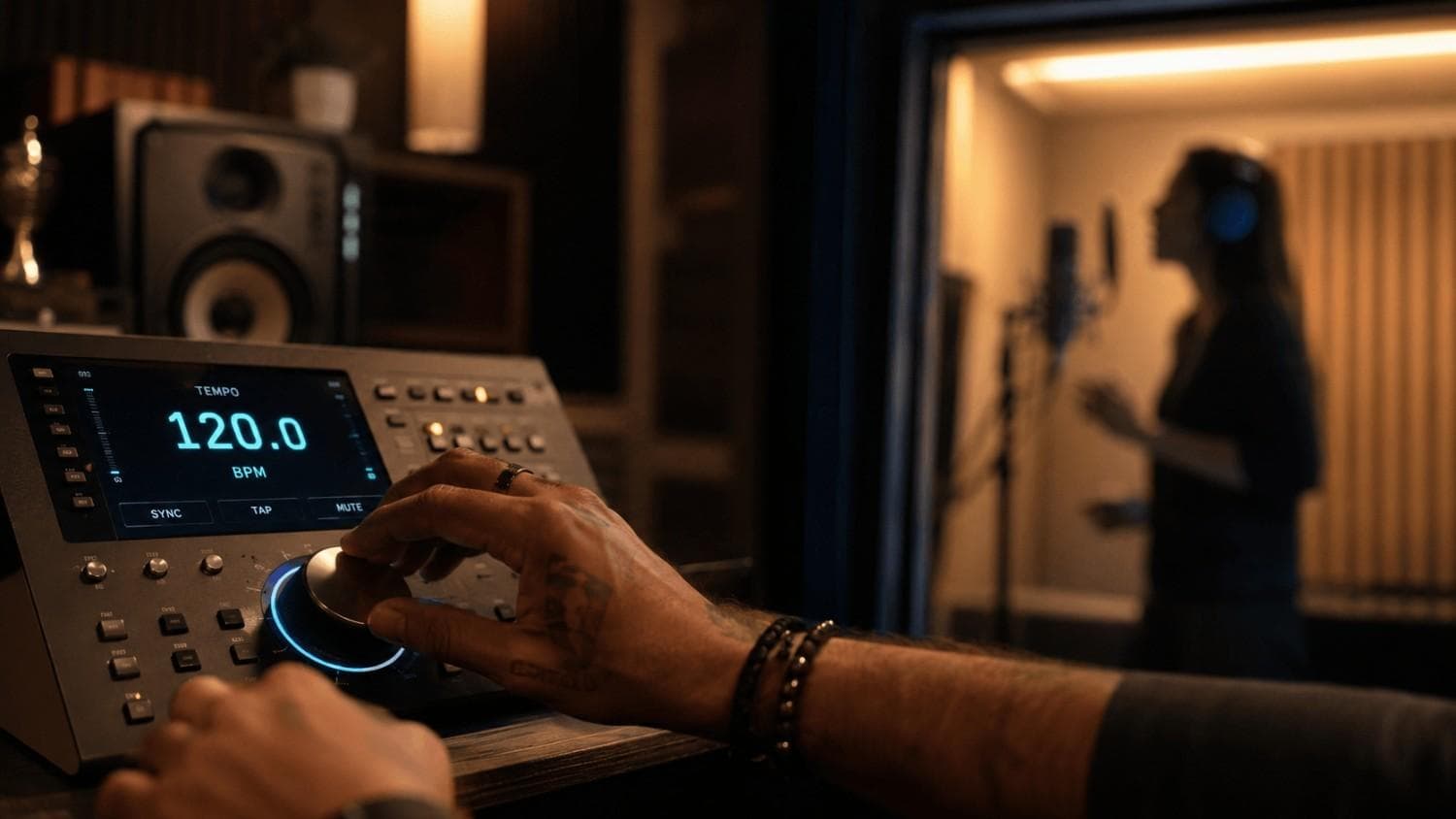
Every recording session begins with hundreds of creative decisions. Songwriters choose melodies, producers shape arrangements, musicians experiment with grooves, and engineers prepare the recording environment. Yet one decision quietly influences every performance that follows: the tempo.
Many artists don't realize how important that choice is until it's too late. A song that feels exciting during rehearsal can suddenly seem rushed once the vocals are recorded. A powerful chorus may lose its impact because the tempo leaves no room for the emotion to breathe. Sometimes the opposite happens: the music drags, the performance loses momentum, and everyone in the studio agrees that “something feels off” without immediately identifying the real problem. More often than not, that problem isn't the songwriting or the musicianship. It's the BPM chosen before the first recording began.
Professional producers rarely treat tempo as just another project setting inside their DAW. Instead, they see it as one of the earliest creative decisions in the entire production process. Before anyone commits to recording, they spend time making sure the song moves at a pace that supports its emotion, allows comfortable performances, and fits the overall vision of the record.
This guide explains how musicians, producers, and songwriters decide on the right BPM before recording starts. Rather than focusing on calculations or music theory, we'll explore the practical thinking behind tempo selection so you can begin every recording session with a stronger creative foundation.
Why Tempo Is One of the First Creative Decisions
Tempo doesn't simply determine how fast a song plays. It shapes how the music feels.
Imagine listening to the same song performed twice. In one version, every lyric has room to breathe, the instruments feel relaxed, and the emotional moments naturally unfold. In the second version, nothing about the melody or arrangement has changed, yet the performance suddenly feels hurried and slightly uncomfortable. The difference could be as little as a few BPM.
That small adjustment changes how musicians perform, how vocal phrases flow, and how listeners experience the music. A chorus that once felt powerful may suddenly sound rushed. A verse that previously carried emotion might begin to lose its intimacy because there is no longer enough space between musical phrases.
This is why experienced producers often spend considerable time experimenting with tempo before recording begins. They understand that choosing the right BPM isn't about finding a mathematically perfect number; it's about discovering the pace where the song feels most natural.
Making that decision early also prevents unnecessary work later in the production process. Once multiple instruments, vocals, edits, and automation have been recorded, changing the project tempo can quickly become inconvenient. While modern recording software makes tempo changes possible, rebuilding a session after several recording stages is rarely as efficient as choosing the right BPM from the beginning.
For that reason, professional studios typically treat tempo selection as part of pre-production rather than something to adjust halfway through recording.
Start With the Song's Emotion, Not a Number
One of the most common mistakes beginners make is opening a new recording session and immediately asking, “What BPM should this song be?”
Experienced producers usually ask a different question first: “How should this song make people feel?”
That change in thinking leads to much better decisions.
Tempo should support the emotion of a song, not define it. Before settling on a BPM, producers listen to the lyrics, imagine the performance, and think about the emotional experience they want listeners to have. Only then do they begin experimenting with tempo.
Consider a songwriter working on an emotional piano ballad. Increasing the tempo might make the performance feel slightly more energetic, but it could also reduce the space that allows important lyrics to connect with the listener. On the other hand, a modern pop anthem recorded too slowly may lose the excitement that gives its chorus impact.
The goal isn't to find the “correct” BPM according to a chart. The goal is to find the tempo that allows the song to communicate exactly what the artist intends.
Different musical styles often encourage different tempo directions, but they should never become rigid rules.
| Creative Direction | Tempo Tendency |
|---|---|
| Emotional, reflective songs | Slower with more breathing room |
| Mainstream pop | Balanced between energy and expression |
| Dance-focused productions | Faster and rhythm-driven |
| Aggressive rock or punk | Fast with continuous momentum |
| Cinematic or atmospheric music | Slower to create space and tension |
These examples provide creative guidance rather than fixed targets. Two songs within the same genre can require completely different tempos depending on the melody, lyrics, arrangement, and performers.
Professional producers know that the best tempo isn't chosen by looking at numbers; it's discovered by listening to how the song responds when it's played.
Test Three Different BPM Options Before Recording
One of the simplest habits that separates experienced producers from beginners is that they rarely commit to the first tempo they try.
Instead, they compare multiple versions of the same song before making a final decision.
A difference of only three or four BPM may seem insignificant on paper, but once musicians begin performing, those small adjustments can completely change the character of the music. A vocal melody might flow more naturally, a guitar rhythm may lock into the groove more comfortably, or a chorus could suddenly feel much more impactful.
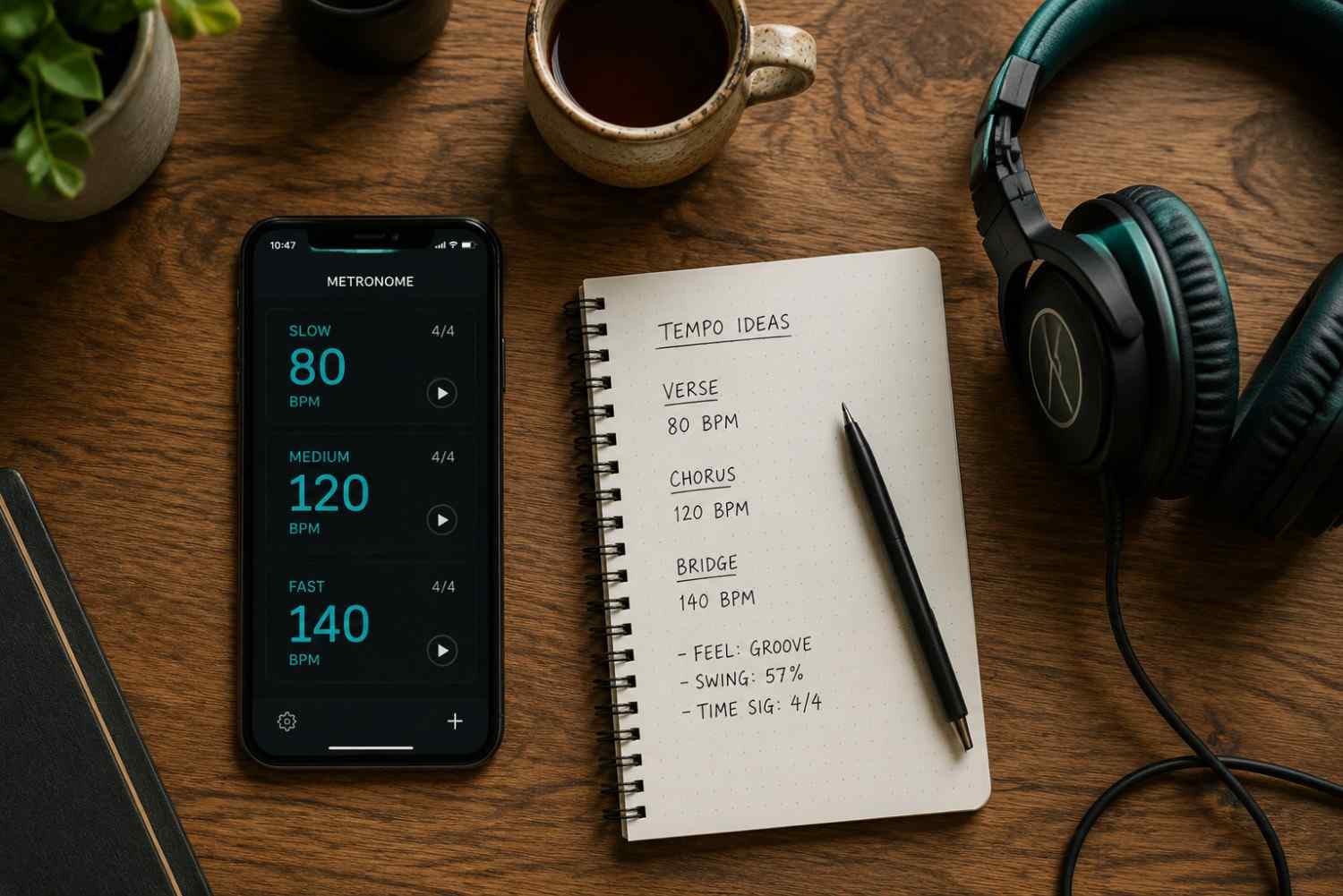
Rather than guessing which tempo is best, producers allow the song itself to provide the answer. A common approach is to record short demo performances at three different tempos. Instead of making dramatic changes, they stay close to the original idea so the comparison remains meaningful.
| Version | Tempo | Purpose |
|---|---|---|
| Demo A | Slightly slower | Evaluate space, emotion, and lyrical phrasing. |
| Demo B | Original tempo | Use as the baseline for comparison. |
| Demo C | Slightly faster | Test energy, momentum, and overall drive. |
Listening to these versions back-to-back often reveals differences that aren't obvious while performing. The slower version may allow emotional moments to breathe, while the faster version may create excitement but reduce clarity in the lyrics. In many cases, the original tempo ends up being the best choice, but not always.
This process takes very little time compared to the hours spent recording, editing, and producing a finished track. Investing a few extra minutes before recording can prevent an entire session from feeling uncomfortable later.
Listen Back Before You Decide
When comparing different tempos, avoid judging them immediately after recording.
Instead, step away for a few minutes and return with fresh ears. Producers often discover that the version that felt exciting during the performance isn't necessarily the one that sounds strongest during playback.
Pay attention to questions like:
- Does the vocal delivery sound relaxed or rushed?
- Does the groove feel natural from beginning to end?
- Does the chorus create the emotional impact you expected?
- Can every instrument perform comfortably without feeling forced?
The answers usually make the best tempo much easier to identify than simply choosing a BPM based on instinct.
How Different Genres Influence Tempo Choice
Every genre has its own traditions, but those traditions should be viewed as creative references rather than strict rules.
For example, listeners naturally expect different pacing from an acoustic folk song than they do from an electronic dance track. Ignoring those expectations isn't necessarily wrong, but it should always be an intentional artistic decision rather than an accident.
Professional producers often begin by considering the genre conventions of a genre before adapting the tempo to suit the individual song.
| Genre | General Tempo Character |
|---|---|
| Pop | Balanced between energy and vocal clarity |
| Rock | Strong forward momentum with room for performance dynamics |
| Hip-Hop | Groove-focused with emphasis on rhythmic feel |
| Country & Folk | Comfortable pacing that supports storytelling |
| EDM & Dance | Consistent, energetic tempo designed for movement |
These aren't rules that every song must follow. Instead, they provide a starting point during pre-production.
A pop ballad may intentionally slow down to highlight emotion, while an indie rock track might become more energetic than listeners expect. The important point is that producers make those decisions deliberately after considering the purpose of the song.
Another factor that often influences tempo is the performer.
Two singers can perform the same composition beautifully at different tempos because their vocal delivery, breathing patterns, and phrasing naturally differ. Likewise, a drummer may feel more comfortable driving a groove at one pace while another musician performs it more confidently, slightly slower.
The final BPM should therefore reflect both the style of the music and the people bringing it to life.
When Musicians Realize the BPM Is Wrong
Choosing the wrong tempo doesn't always become obvious immediately. In many cases, the song feels perfectly fine during the first rehearsal. The real problems appear once recording begins and musicians start listening to complete takes instead of individual performances.
This is why experienced producers pay close attention to how the song behaves throughout an entire recording session rather than relying on their first impression.
The Song Suddenly Feels Rushed
One of the clearest warning signs is when performers begin to feel as though they're constantly trying to catch up with the music:
- A vocalist may struggle to finish phrases comfortably before the next line begins.
- Guitarists may feel they have less time to articulate important parts.
- Drummers often notice that fills become unnecessarily busy or difficult to execute cleanly.
Nothing is technically “wrong” with the performance, yet everyone in the room senses that the song isn't breathing naturally.
When several musicians share the same feeling, it's often worth questioning the tempo rather than asking everyone to perform harder.
The Song Starts Losing Energy
The opposite problem is equally common. Sometimes a production feels slow, not because the BPM itself is objectively low, but because the chosen tempo doesn't support the arrangement. Watch for these warning signs:
- Verses may begin to drag.
- Transitions lose momentum.
- Choruses fail to deliver the lift that the songwriter originally imagined.
In these situations, adding more instruments or increasing volume rarely solves the issue. Often, the song simply needs a slightly different pace to maintain its natural flow.
Vocal Comfort Is One of the Best Indicators
Professional producers frequently use the vocalist as their first reference when evaluating tempo. A singer naturally reveals whether a song is comfortable to perform.
If breathing becomes difficult, lyrical phrasing feels cramped, or emotional delivery starts sounding forced, the BPM may be working against the performance instead of supporting it.
On the other hand, when the vocalist delivers lines confidently and without unnecessary effort, it's usually a strong sign that the tempo is close to where it should be.
Rather than asking, “Can the singer perform this?” producers often ask, “Does the singer sound completely comfortable performing this?” Those are two very different standards.
Don't Ignore What the Band Is Telling You
Tempo decisions become even more important when several musicians are recording together. If multiple performers react to the tempo in similar ways, those aren't always performance mistakes. Sometimes they're signs that the chosen BPM isn't serving the musicians:
- The drummer feels the groove is being rushed.
- The bassist struggles to lock in consistently.
- The guitarist keeps naturally pulling behind the click.
Experienced producers pay attention to these patterns instead of treating every issue as a playing problem. When multiple performers independently react to the tempo in similar ways, it's worth pausing the session and testing another BPM before continuing.
Making that adjustment early is almost always easier than repairing an entire production after every instrument has already been recorded.
A Simple Workflow for Choosing the Right Tempo
Professional tempo selection isn't based on intuition alone. Most producers follow a simple process that helps them evaluate a song before committing to a full recording session.
The workflow doesn't need to be complicated; it simply needs to give the music enough opportunity to reveal its most natural pace.
| Step | Objective |
|---|---|
| Understand the song's emotional goal | Decide how the listener should experience the music. |
| Consider the genre | Use genre conventions as a creative reference, not a fixed rule. |
| Record short demos at multiple tempos | Compare how the song feels rather than relying on assumptions. |
| Evaluate the vocalist and instrumental performance | Choose the tempo where performances feel most natural. |
| Rehearse the arrangement | Confirm that the entire song flows comfortably from beginning to end. |
| Finalize the project tempo before full production | Begin recording with confidence instead of making major changes later. |
This process may seem deliberate, but it usually saves far more time than repeatedly editing or re-recording parts because the original tempo didn't suit the song. The goal isn't to discover the “perfect” BPM according to a chart or formula.
The goal is to find the tempo that allows every performance to feel effortless, every musical idea to communicate clearly, and the entire production to move naturally from beginning to end.
Continue Learning
Choosing the right tempo is only one part of building a successful recording session. These guides can help you continue refining your production workflow.
- How DJs Calculate BPM Before Mixing Songs
- How to Find the BPM of Any Song
- How to Practice with a Metronome
- How Accurate Is Tap Tempo? Human vs Software BPM Detection
- Pitch Percentage & BPM: Technics vs. Pioneer Fader Behavior
Final Thoughts
Choosing a song's BPM isn't about finding a universally correct number; it's about finding the pace that allows the music to communicate exactly what you intended.
The right tempo supports every part of the production. It helps vocalists perform comfortably, gives musicians room to express themselves naturally, and creates a foundation that keeps the entire recording session moving smoothly. Spending a little extra time during pre-production to compare different tempos is often far easier than trying to solve tempo-related problems after the recording process is already underway.
Professional producers understand that great recordings begin long before the first take. They test, compare, listen, and refine until the song feels right. Adopting the same mindset can save time, reduce frustration, and lead to stronger performances from everyone involved in the project.
Start Your Recording Session with Confidence
Once you've decided on the tempo that best fits your song, verify your project settings before recording begins.
Use our free BPM Calculator to confirm your chosen tempo and start your next recording session with a solid musical foundation.
This article has been researched, written, and reviewed according to our Editorial Policy.
Frequently Asked Questions
Common questions about finding the BPM of a song.