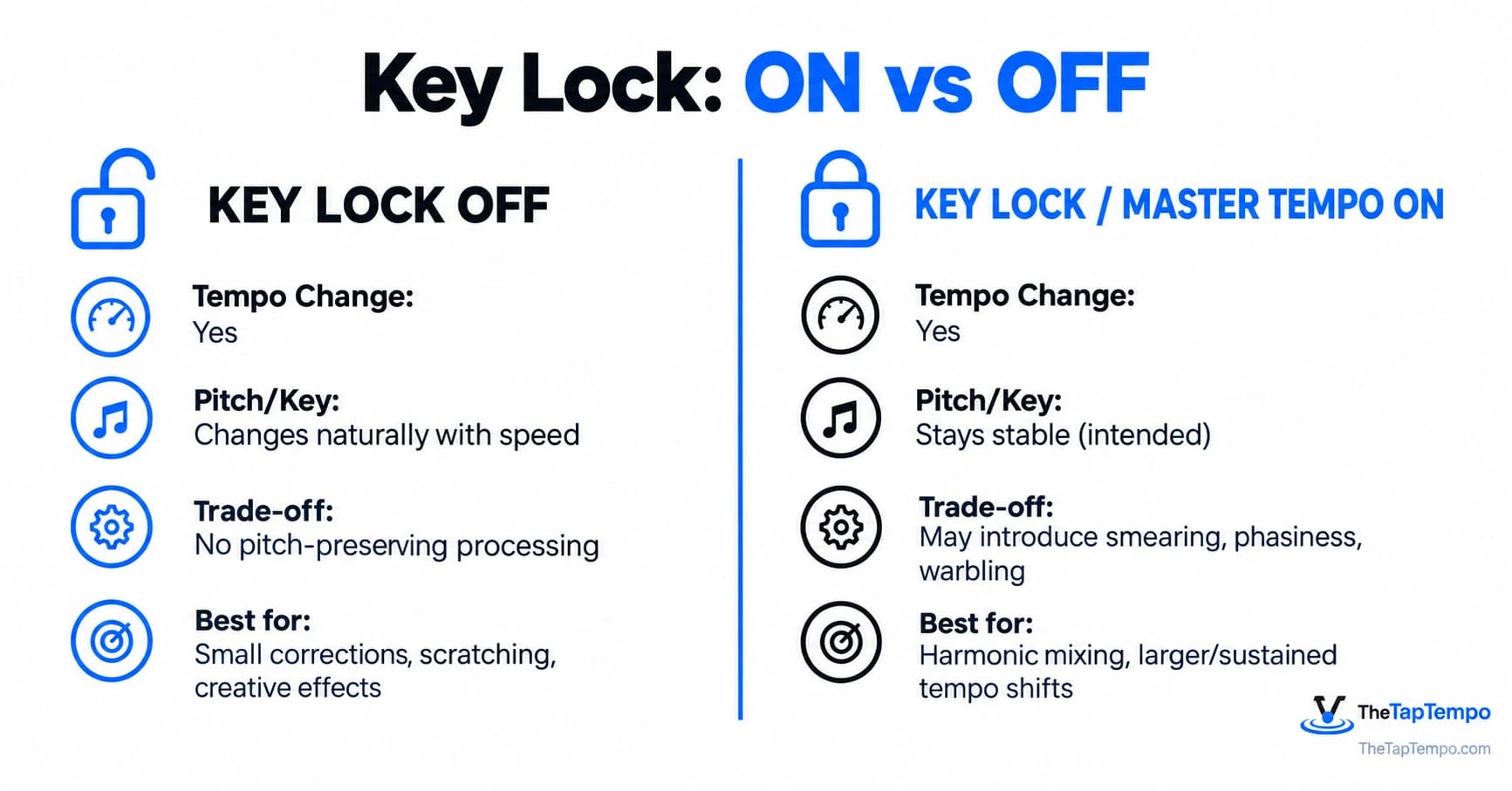
Master Tempo vs Key Lock: Serato & Rekordbox Guide
Learn what Master Tempo and Key Lock really do, why they can cause audio artifacts, how pitch shifts affect the Camelot Wheel, and when to turn Key Lock off.
Guides, theory, and production tips on rhythm, tempo, and music production.
Every guide connects to the tools that power it.
Convert and calculate precise timing values.

Learn what Master Tempo and Key Lock really do, why they can cause audio artifacts, how pitch shifts affect the Camelot Wheel, and when to turn Key Lock off.

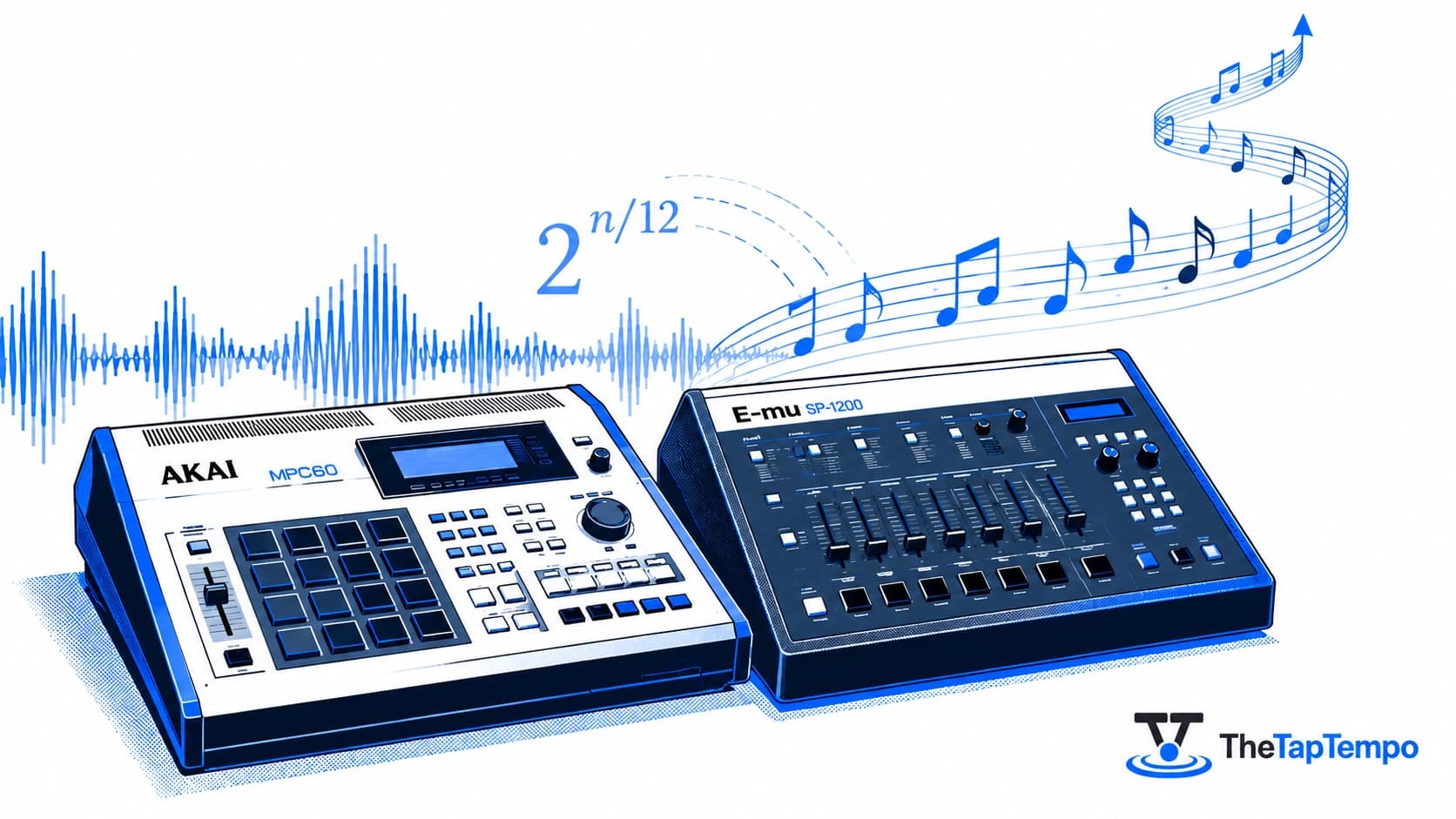
Why classic hardware samplers changed tempo when you changed pitch: the exact 2^(n/12) math behind semitone shifts, how it played out on the MPC60 and SP-1200, and the golden-era memory-saving hack.

Why does the same pitch % feel different on a Technics turntable vs. a Pioneer CDJ? A hardware-level look at pitch range, resolution, calibration, and drift.

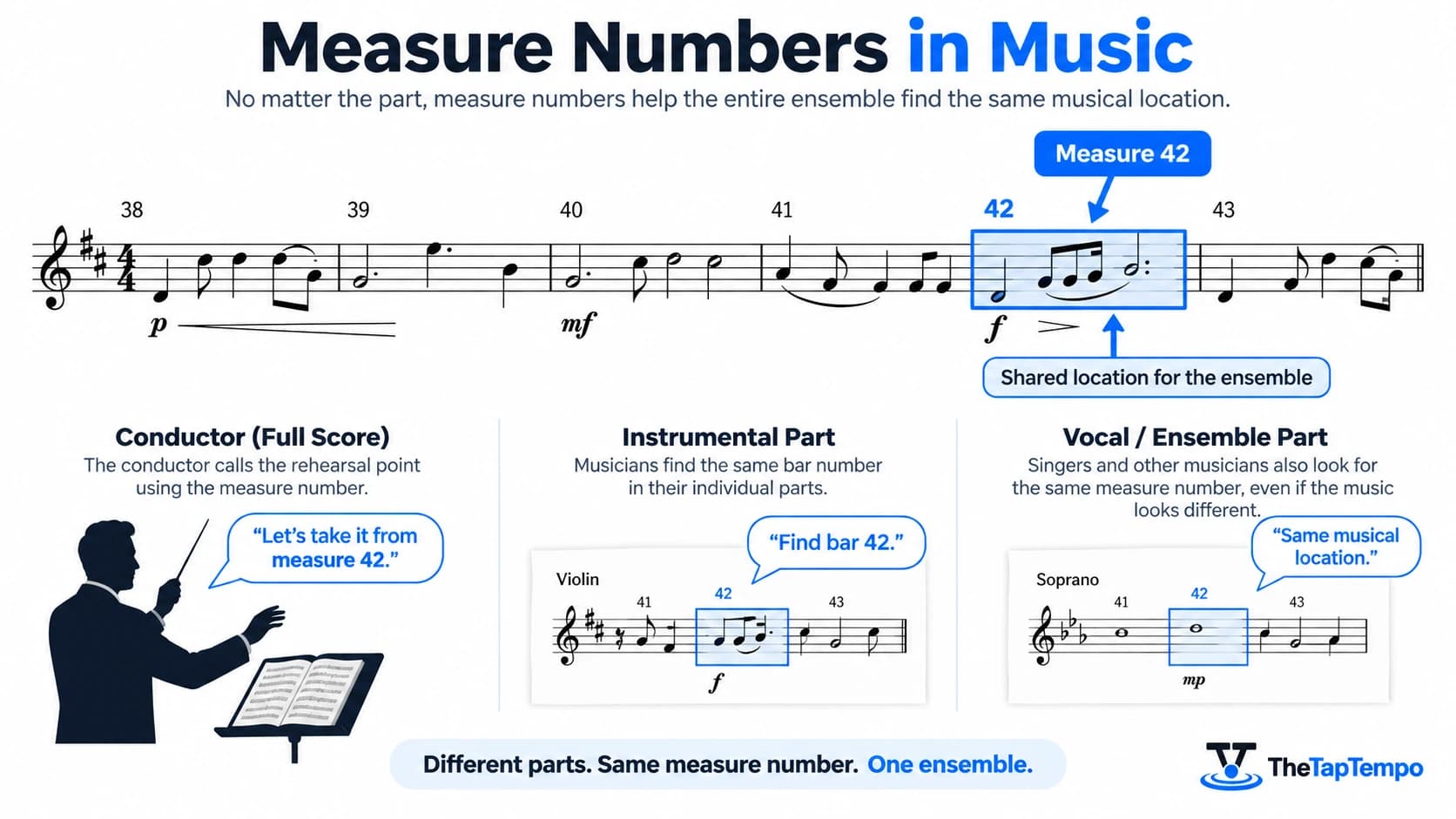
Learn what measure numbers in music are, why conductors call out bar numbers, and how orchestras, bands, and choirs use them to navigate scores fast.

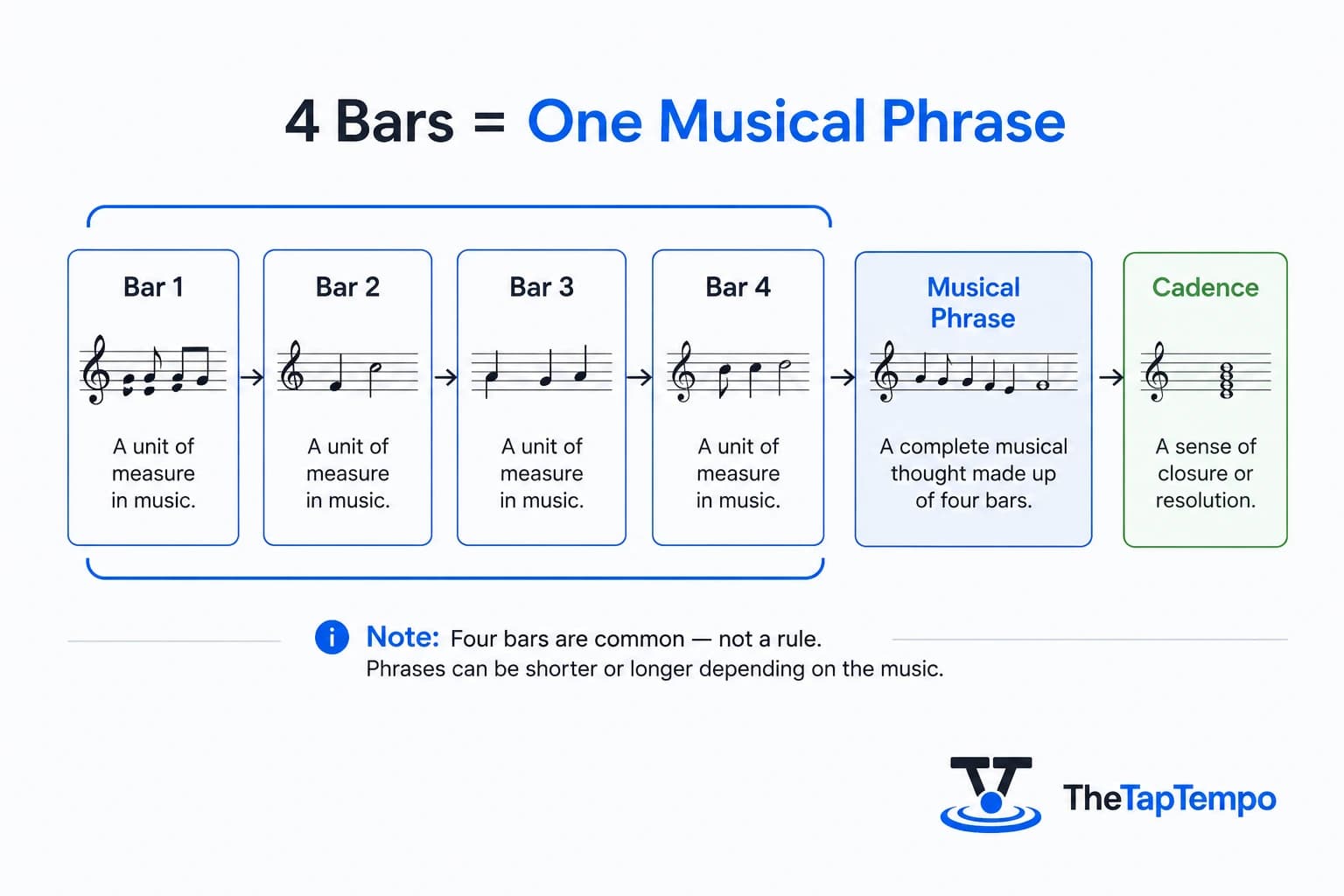
Learn how musical phrases are built from bars and measures. Understand phrase structure, length variations, cadences, and how to spot phrases in sheet music.

Discover how Italian musical terms became the standard language of tempo markings in Western classical music, from Renaissance roots to modern use.

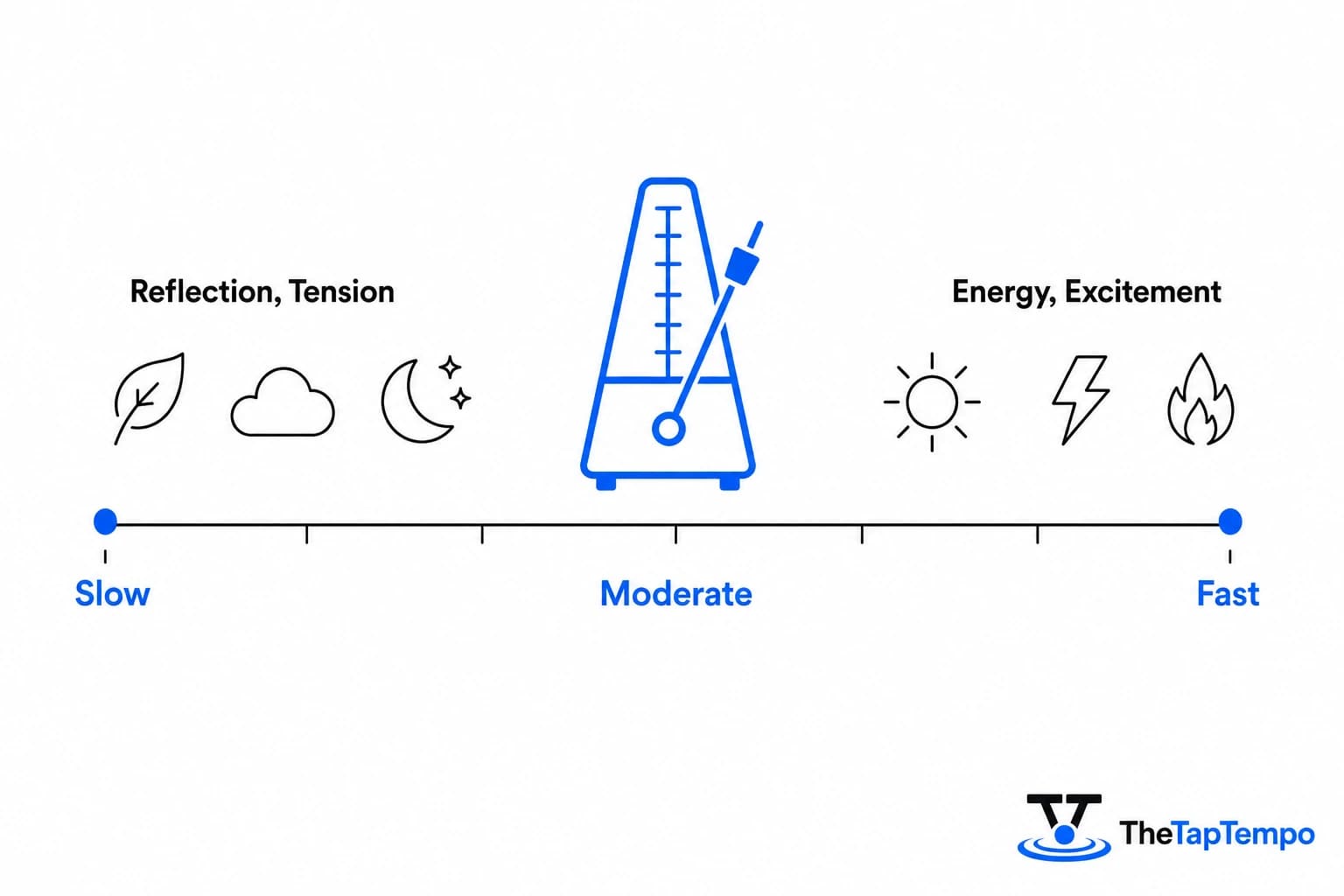
Discover how tempo affects emotion in music, shaping tension, energy, and reflection. Learn how composers and performers use pacing to tell a story.

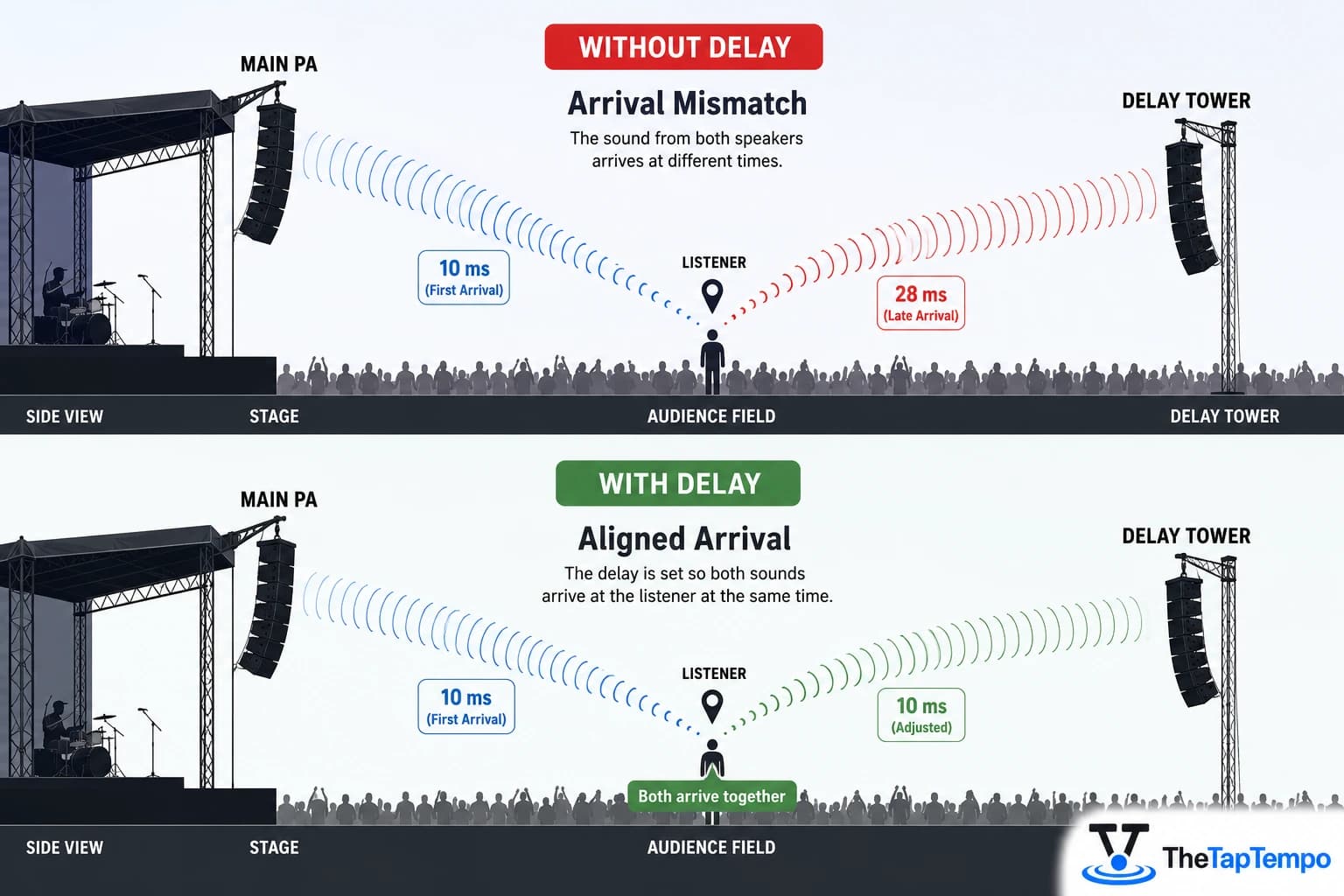
Learn how speaker delay helps live sound engineers align PA systems, delay towers, and fill speakers for clear, consistent venue coverage.

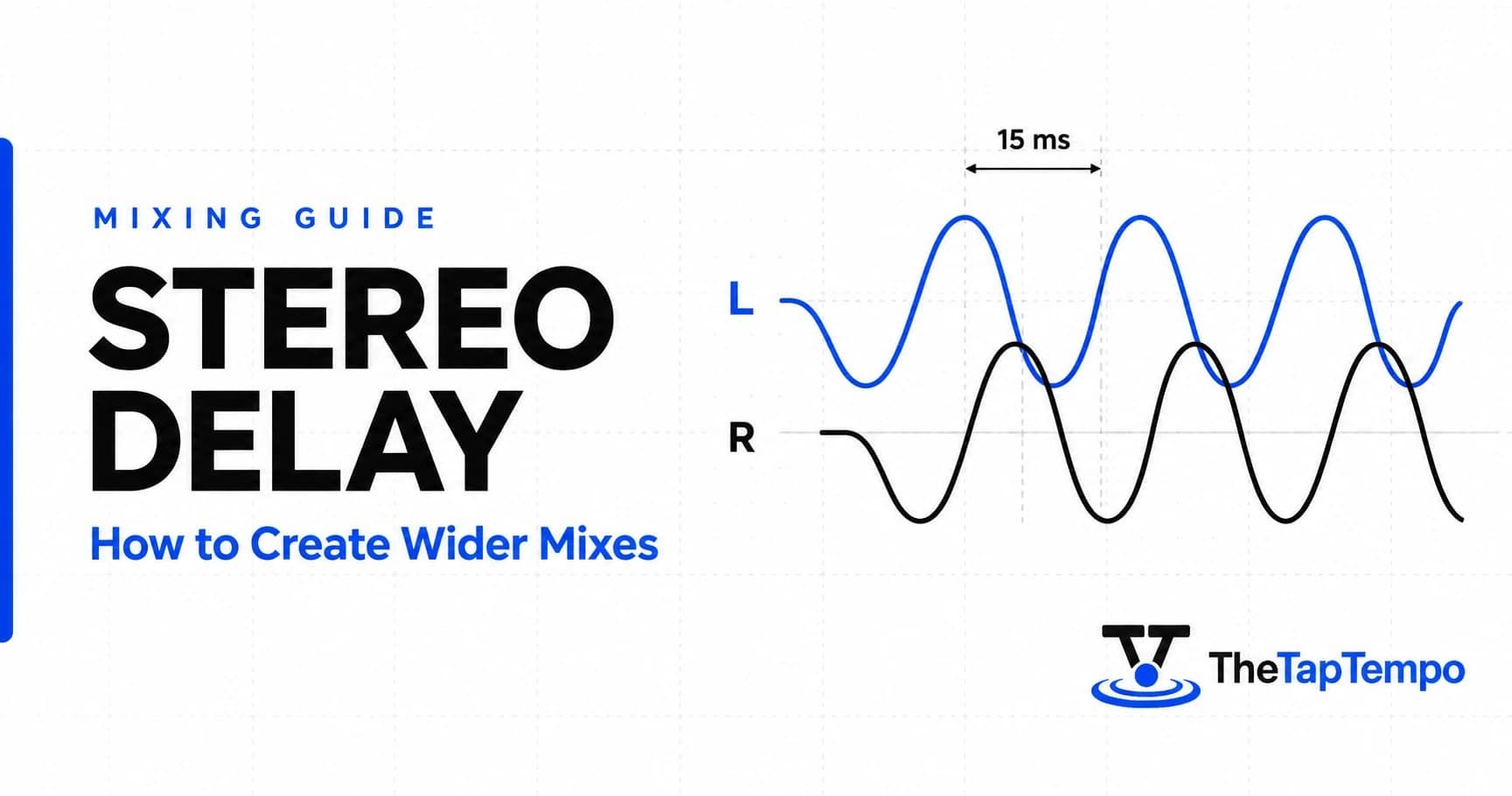
Stereo delay explained: how it compares to mono and ping-pong delay, and how to use it on vocals, guitars, and synths without losing mono compatibility.

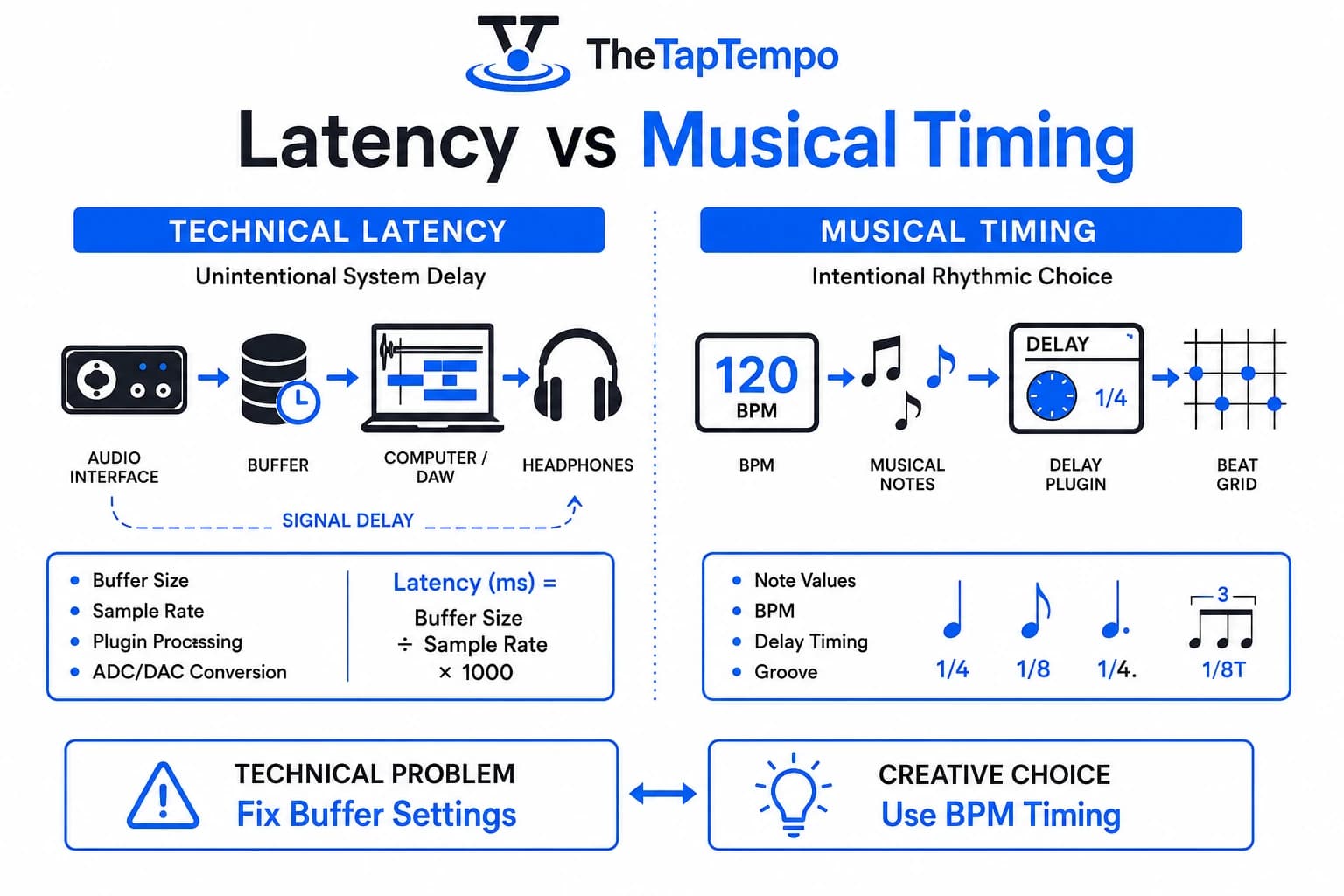
Latency and musical timing both use milliseconds, but they mean different things. Learn to tell system delay from intentional timing when recording and mixing.
Have questions about tempo, BPM, or music theory? Get answers with TapTempoAI