
How to Set Delay Time for Electric Guitar Without Guesswork
Learn how to set delay for electric guitar with confidence. Discover the best delay styles for rhythm, lead, worship, rock, and blues, then dial in the perfect timing.
Quick Answer
Setting delay time for electric guitar is about matching the delay style to what the song needs rather than copying settings from online presets. Slapback delay adds thickness for blues and rock rhythm, quarter-note delay provides balanced sustain for lead melodies, and dotted-eighth delay creates rhythmic movement popular in modern worship and ambient guitar. Once you know the song's BPM, you can convert any delay style into precise millisecond values using a Delay & Reverb Time Calculator.
Key Takeaways
- The best delay style depends on the song, not the pedal or preset.
- Slapback, quarter-note, and dotted-eighth delays each serve different musical purposes.
- Matching delay timing to the song's tempo prevents the effect from sounding disconnected.
- Too many repeats or excessive mix levels often make guitar tone sound muddy rather than polished.
How to Set Delay Time for Electric Guitar Without Guesswork
Getting a great guitar delay sound isn't about turning random knobs until something works. It's about choosing a delay that supports the song you're playing.
Many guitarists copy settings from YouTube videos or online forums, only to discover that the same preset sounds completely different in their own rig. That's because delay isn't a one-size-fits-all effect. A setting that works perfectly for a soaring worship lead may sound overwhelming in a blues solo or completely disappear behind a heavy rock rhythm.
The good news is that you don't need to memorize dozens of presets. Once you understand why different delay styles exist, selecting the right one becomes much easier.
In this guide, you'll learn how experienced guitarists approach delay, which styles suit different playing situations, and how to avoid the common mistakes that make guitar echoes sound muddy or distracting. After choosing the right delay style, you can use our Delay & Reverb Time Calculator to generate precise timing values that match your song.
Why Delay Timing Can Make or Break Your Guitar Tone
Delay doesn't simply repeat your notes; it becomes part of your performance. Every repeat interacts with the rhythm of the song, so even small timing changes can completely change how your guitar feels in the mix.
A Good Delay Should Support Your Playing
The best delay is often the one you don't consciously notice.
Instead of competing with your picking, the repeats should sit naturally behind each note, adding space and depth without making the performance sound cluttered. When the timing fits the music, the guitar feels bigger while still remaining clear.
Different Songs Need Different Delay Styles
A short slapback delay works beautifully for vintage rock and blues, but it won't create the spacious atmosphere many worship guitarists are looking for. Likewise, a long rhythmic delay that sounds incredible during a lead solo may become distracting when used on a busy rhythm part.
That's why experienced players don't start by asking, "Which delay pedal should I use?"
They ask, "What does this song need?"
Delay Timing Is More Important Than More Delay
One of the biggest beginner mistakes is assuming that adding more repeats automatically creates a better guitar tone. In reality, excessive delay often fills the spaces where other instruments and vocals need to sit.
Choosing the right timing almost always produces a cleaner and more professional sound than simply increasing the amount of delay.
Understanding the Most Common Guitar Delay Styles
Not every delay is designed to achieve the same result. Some add subtle depth, others create rhythmic movement, while a few are intended to become a noticeable part of your guitar tone.
Choosing the right style depends less on the pedal you're using and more on how you want the guitar to sit in the song.
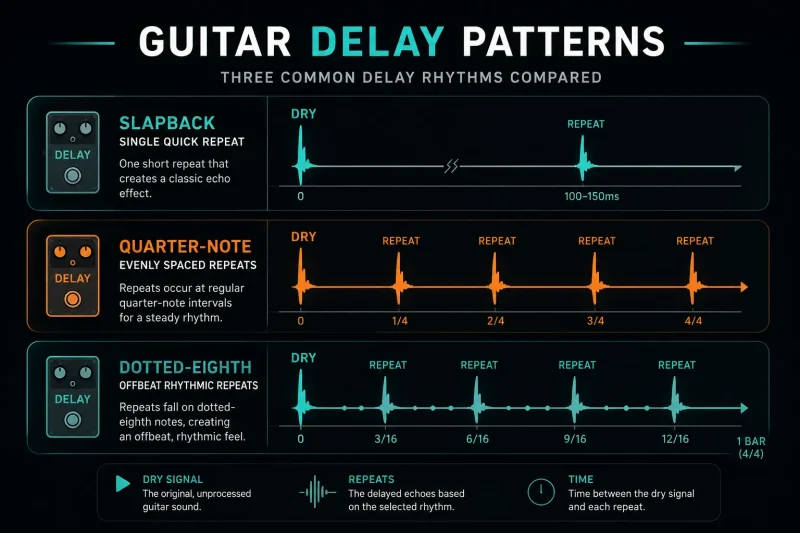
Slapback Delay
Slapback delay produces a single, very quick repeat immediately after your original note. Instead of creating a long echo, it adds thickness and presence, making the guitar sound fuller without becoming overly obvious.
It's a classic choice for:
- Rockabilly
- Blues
- Classic Rock
- Country
Many guitarists also use slapback to give clean rhythm parts a little extra character while keeping the performance tight and natural.
Quarter-Note Delay
Quarter-note delay repeats once every beat, creating a balanced and predictable echo that naturally follows the pulse of the song.
Because the repeats are evenly spaced, this style works well when you want the delay to support your playing rather than become the main focus.
It's commonly used for:
- Lead guitar melodies
- Clean arpeggios
- Slow rock ballads
- Modern worship music
When used with moderate feedback, quarter-note delay adds sustain and space without making the mix feel crowded.
Dotted-Eighth Delay
Few delay styles are as recognizable as the dotted-eighth-note delay. Instead of repeating directly on the beat, the echoes fall between the main notes, creating a flowing rhythmic pattern that almost sounds like another guitarist is playing alongside you.
This style became especially popular in modern worship and ambient guitar because it creates movement while leaving room for the original performance to remain clear.
When played cleanly, dotted-eighth delay can transform simple melodic phrases into rich, layered textures.
Analog vs Digital Delay
The timing may stay the same, but the character of the repeats changes depending on the delay type.
| Delay Type | Best For | Sound Character |
|---|---|---|
| Analog Delay | Blues, Classic Rock, Vintage tones | Warm, softer repeats |
| Digital Delay | Worship, Pop, Modern Rock | Clean, bright, highly defined repeats |
Once you know your song's BPM, converting that number into an exact delay time in milliseconds removes all the guesswork. You can calculate this manually or let a BPM to ms converter do it instantly.
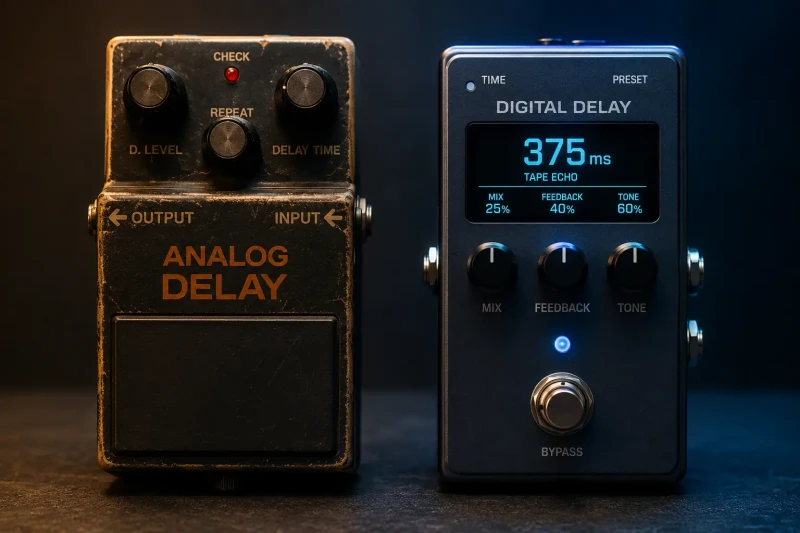
Neither option is objectively better. Many guitarists keep both available because each suits different musical situations.
The important step isn't choosing the "best" delay; it's choosing the style that complements your playing and the song you're performing. In the next section, we'll look at how those choices change when you're playing rhythm guitar instead of lead.
Delay Settings for Rhythm Guitar
Rhythm guitar provides the foundation of a song, so its delay should enhance the groove rather than compete with it. In most cases, subtle settings work better than long, dramatic repeats.
Keep the Repeats Under Control
Too many repeats can blur chord changes and reduce the clarity of your playing. For rhythm parts, a cleaner delay with fewer repeats usually helps the guitar stay present without overwhelming the rest of the band.
A good rhythm delay should add depth while allowing every chord to remain easy to hear.
Match the Delay to the Groove
Different songs benefit from different delay styles.
- Slapback delay adds warmth and thickness to blues, country, and classic rock rhythm parts.
- Quarter-note delay works well for slower songs where you want the repeats to blend naturally with the beat.
- Dotted-eighth delay is often used in modern worship music to create rhythmic movement during clean picking patterns.
The goal isn't to use the most complex delay; it's to choose one that complements the rhythm already being played.
Leave Space for the Band
Rhythm guitar shares the mix with vocals, drums, keyboards, and bass. If the delay is too loud or too long, those repeats begin to occupy the same space as other instruments.
Many experienced guitarists start with conservative delay settings during rehearsal and only increase the effect if the arrangement has enough room for it.
Delay Settings for Lead Guitar
Lead guitar usually has more freedom than rhythm guitar. A well-chosen delay can make solos feel larger, smoother, and more expressive without changing the notes themselves.
Use Delay to Add Sustain
One of the biggest advantages of delay is that it helps notes feel longer and more connected. Instead of relying solely on distortion or compression, many lead players use delay to create a sense of sustain that feels natural.
This is especially useful during melodic solos where every note needs space to develop.
Choose the Style That Fits the Song
Different lead tones call for different delay approaches.
| Playing Style | Delay Style |
|---|---|
| Blues solos | Slapback or short analog delay |
| Classic rock leads | Quarter-note delay |
| Modern worship leads | Dotted-eighth delay |
| Ambient instrumental playing | Longer rhythmic delays |
These aren't strict rules, but they're reliable starting points used by many professional guitarists.
Don't Let the Delay Play for You
A common beginner mistake is setting the delay so loudly that the repeats become more noticeable than the original guitar.
The best lead delays support your phrasing instead of distracting from it. If every repeat demands attention, reducing the mix level or feedback often produces a more polished and musical result.
In the next section, we'll look at how these delay styles change across different genres and why the same settings rarely work for every type of music.
Matching Delay to Different Music Genres
The same delay setting won't suit every genre. A sound that works perfectly in a worship set may feel completely out of place in a fast rock song or a traditional blues performance.
Instead of searching for a universal preset, start by considering the style of music you're playing.
Rock Guitar
Rock guitar often benefits from delays that add sustain without making riffs sound muddy.
For rhythm parts, many players prefer short delays or subtle slapback effects. During solos, a quarter-note delay is a popular choice because it adds depth while allowing fast phrases to remain clear.
Blues Guitar
Blues players usually aim for a natural, expressive tone rather than a heavily processed sound.
A short slapback or warm analog delay can make single-note lines feel fuller without changing the character of the guitar. Keeping the repeats subtle allows bends, vibrato, and dynamics to remain the focus.
Worship Guitar
Modern worship music frequently uses delay as part of the overall atmosphere.
Clean guitar parts often rely on dotted-eighth or quarter-note delays to create rhythmic movement that blends with keyboards and ambient pads. When used carefully, these repeats fill space without overpowering the arrangement.
Choose the Song Over the Preset
Even within the same genre, every song is different.
A quiet verse may need only a touch of delay, while a soaring chorus or melodic solo can support a more noticeable effect. Treat presets as starting points rather than fixed rules, and adjust them to suit the arrangement you're playing.
The Most Common Guitar Delay Mistakes
Most delay problems aren't caused by expensive or inexpensive gear. They're usually the result of using the wrong settings for the musical situation.
Avoiding a few common mistakes can make your guitar sound cleaner and more professional almost immediately.
Using Too Much Delay
One of the easiest ways to lose clarity is by adding too many repeats or setting the effect level too high.
If every note creates a long trail of echoes, important parts of your performance can become difficult to distinguish. In many cases, reducing the delay mix produces a more polished sound.
Ignoring the Song's Tempo
Delay works best when it complements the rhythm of the music. If you don't already know the song's exact BPM, tapping it out first makes choosing the right delay time much easier.
Choosing a delay time without considering the song can cause repeats to land in awkward places, making the performance feel disconnected. Matching your delay to the tempo helps the effect sound intentional rather than random.
Using the Same Setting for Every Song
Many guitarists save one favorite preset and use it everywhere.
While this approach is convenient, different songs often require different delay styles. A setting that sounds perfect for a lead solo may not suit clean rhythm playing or a slower ballad.
Adjusting Delay in Isolation
A delay tone that sounds impressive when practicing alone can become overwhelming in a full band mix.
Fine-tune your delay while playing with the rest of the band, or practice against a steady metronome first to make sure your timing stays locked before adding effects.
Continue Learning
Now that you understand how to choose the right delay style for different guitar situations, these guides will help you explore the tempo and timing concepts that keep your playing tight.
- How to Find the BPM of Any Song
- Common Metronome Mistakes That Slow Down Your Progress
- How to Choose the Right BPM Before You Start Recording a Song
- Understanding Note Values: Why Quarter, Eighth, and Triplet Delays Sound Different
- Speaker Delay Explained: Live Sound & PA System Guide
Ready to Dial In the Perfect Delay?
Choosing the right delay style is the first step. Once you've decided whether your song needs slapback, quarter-note, or dotted-eighth delay, the next step is finding the exact timing.
Use our Delay & Reverb Time Calculator to generate accurate delay times that match your song's tempo, helping your guitar stay tight, musical, and perfectly in sync with the rest of your performance.
This article has been researched, written, and reviewed according to our Editorial Policy.
Frequently Asked Questions
Common questions about finding the BPM of a song.